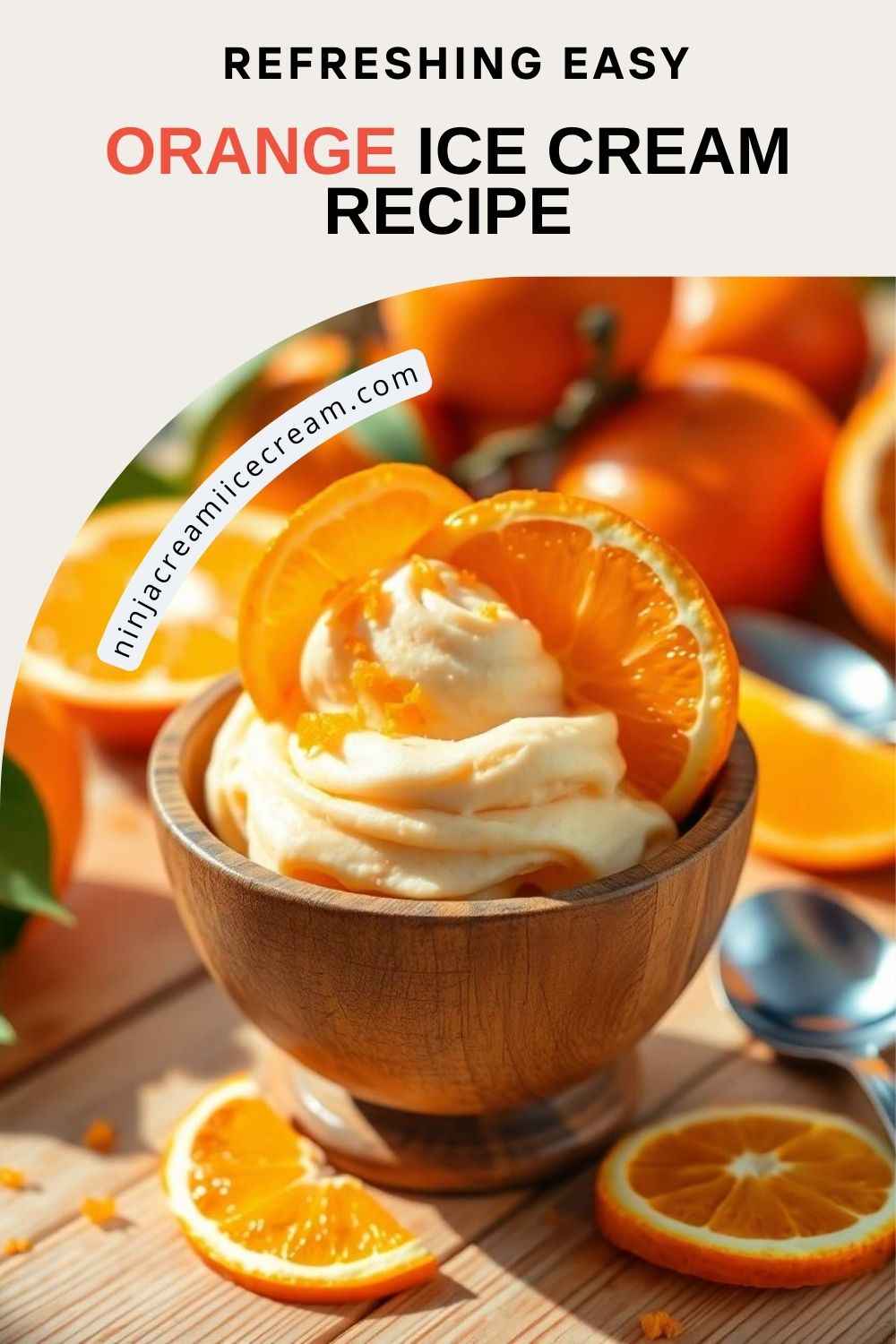
Imagine the vibrant glow of a summer sunset captured in a single scoop, bursting with the sweet, tangy essence of fresh oranges. Now, imagine achieving this creamy, dreamy indulgence right in your own kitchen, without the need for any special ice cream machine. Yes, it's entirely possible to create truly spectacular Easy Orange Ice Cream: No Machine Needed for Bright Citrus, delivering sunshine to your spoon with every delightful bite.
Far from a mere frozen dessert, this homemade orange ice cream is a culinary revelation. It marries the intense, aromatic brightness of fresh oranges with a luxuriously smooth, cooked custard base. The result is a scoop that resists iciness, melts beautifully on the tongue, and offers a pure, authentic orange flavor that far surpasses anything store-bought or artificially flavored. We've refined this method through extensive testing, learning that careful steps—like gently tempering egg yolks and slightly reducing fresh orange juice—are the secrets to an intensely flavorful and remarkably stable no-churn orange ice cream. Get ready to embark on a journey to create a dessert so good, you'll wonder why you ever needed a machine!
Why a Cooked Custard Base is Your Secret Weapon for Creamy No-Churn Ice Cream
The magic behind truly exceptional, machine-free ice cream lies in its foundation: a rich, cooked custard base. Unlike simpler no-churn methods that rely heavily on whipped cream and condensed milk, a custard base provides unparalleled texture and stability. Here's why it's indispensable for your perfect orange ice cream:
- Resists Iciness: The combination of egg yolks and dairy, cooked gently, creates a stable emulsion. This emulsion is crucial because it traps fat and moisture uniformly, preventing the formation of large ice crystals that lead to a grainy or icy texture. For no-churn recipes, where mechanical churning isn't breaking up crystals, this inherent stability is paramount.
- Silky Smooth Mouthfeel: Egg yolks are natural emulsifiers and thickeners. They contribute significantly to the custard's body, providing a velvety, melt-in-your-mouth quality that distinguishes premium ice cream. The fat from heavy cream further enhances this richness, ensuring every spoonful is utterly luxurious.
- Superior Flavor Carrier: A cooked custard base provides a robust, neutral canvas that allows the bright, complex notes of fresh orange to truly shine. The dairy fats absorb and carry the volatile oils from the orange zest and the concentrated flavor of the juice, delivering a more profound and lasting citrus experience.
- Enhanced Stability: The proteins in the egg yolks, once cooked, help to structure the base, making the final frozen product more resistant to rapid melting and breakdown, even after being stored in the freezer for a while.
Mastering this custard base is fundamental to achieving that coveted creamy texture. For an even deeper dive into this technique, explore our related guide: Unlock Ultimate Creaminess: Homemade Orange Ice Cream Secrets.
The Essence of Bright Citrus: Key Ingredients for Your Perfect Orange Ice Cream
Crafting sublime orange ice cream begins with selecting the right ingredients. Each component plays a vital role in building flavor, texture, and that irresistible sunny hue. While specific measurements are key in a recipe, understanding the function of each ingredient will elevate your baking intuition.
Dairy Dream Team for Richness and Texture
- Heavy Cream (full-fat): This is your primary source of richness and smooth mouthfeel. The high fat content is essential for a creamy, non-icy texture, especially in a no-churn recipe. Do not substitute with light cream, as the lower fat content will compromise the final consistency.
- Whole Milk: It thins the custard just enough while still contributing additional milk fat for creaminess. It also acts as an excellent medium to carry the vibrant orange flavor throughout the base. While 2% milk can be used for a slightly lighter result, expect a marginal decrease in creaminess.
Sweetness and Structure Builders
- Granulated Sugar: Beyond simply sweetening, sugar plays a critical role in the ice cream's texture. It helps lower the freezing point, contributing to a softer, more scoopable consistency. Reducing sugar too drastically will result in a firmer, harder-to-scoop ice cream.
- Large Egg Yolks: These are the architectural backbone of your custard. They provide unparalleled silkiness, emulsify the fats and liquids, and create that stable structure that resists iciness. For an eggless version, alternative thickeners exist, but for classic creaminess, yolks are king.
The Heart of the Citrus Flavor
- Fresh Orange Juice: This is non-negotiable for authentic flavor. Skip bottled juices, which often taste flat and lack the vibrant acidity and brightness of freshly squeezed. A small reduction of the fresh juice prior to mixing concentrates its essence without over-thinning the custard base.
- Orange Zest: The true power player for aroma. The zest contains volatile essential oils that deliver a floral, complex, and intensely "fresh" orange note that juice alone simply cannot provide. Never omit the zest; it's critical for that true citrus punch.
Flavor Enhancers and Texture Modifiers
- Vanilla Extract: A subtle yet essential addition, vanilla doesn't overpower but instead balances the intense citrus with a warm, comforting backdrop, rounding out the flavor profile.
- Kosher Salt: A pinch of salt is a secret weapon in sweet dishes. It enhances both the sweetness of the sugar and brightens the overall orange aroma. Be mindful of the type; Diamond Crystal kosher salt has a different volume-to-weight ratio than Morton's.
- Optional: Orange Liqueur (e.g., Cointreau) or Light Corn Syrup: These ingredients are your secret weapon for ultimate scoopability. Alcohol and corn syrup both lower the freezing point of the mixture slightly, preventing the ice cream from becoming rock-hard in the freezer. Just a tablespoon or two makes a noticeable difference in texture.
Understanding the interplay of these components is key to creating a truly authentic and delicious orange ice cream. For a deeper dive into the science of crafting the perfect base, check out our companion article: True Orange Flavor Ice Cream: Master the Silky Custard Base.
Crafting Your Easy Orange Ice Cream: No Machine? No Problem!
Creating this rich, bright orange ice cream without an ice cream maker is simpler than you might think. The key lies in precise technique and patience. Here's a step-by-step guide to achieving frozen perfection.
Essential Equipment (No Machine Required!)
- Heavy-bottomed Saucepan (2-3 L): For even heat distribution when cooking the custard.
- Whisk and Heatproof Spatula: For continuous stirring.
- Instant-read Thermometer: Crucial for ensuring the custard reaches the correct temperature without overcooking.
- Fine-mesh Sieve: To strain out any zest or tiny cooked egg bits, ensuring a silky-smooth texture.
- Large Bowl and Ice Bath: For rapidly chilling the custard—a critical step for food safety and texture.
- Airtight Freezer Container (1.5-2 L) or Loaf Pan with Plastic Wrap: For freezing your finished ice cream.
Step-by-Step Directions:
- Prepare Your Orange Essence: Begin by gently reducing your fresh orange juice in a small saucepan over medium heat until it's slightly concentrated. This intensifies the flavor. Let it cool.
- Warm the Dairy & Sugar: In your heavy-bottomed saucepan, combine the whole milk, heavy cream, and granulated sugar. Heat over medium-low heat, stirring occasionally, just until the sugar dissolves and the mixture is warm to the touch (do not boil).
- Temper the Yolks (The Crucial Step!): In a separate medium bowl, whisk the egg yolks until smooth. Slowly, gradually, and in a thin stream, ladle about a cup of the warm dairy mixture into the whisked yolks, whisking constantly. This gradually brings the yolks up to temperature without scrambling them.
- Cook the Custard: Pour the tempered yolk mixture back into the saucepan with the remaining warm dairy. Return to medium-low heat, stirring continuously with a heatproof spatula or whisk. Cook until the mixture thickens enough to coat the back of a spoon (reaching 175-180°F / 80-82°C on your instant-read thermometer). Do not let it boil, as this can curdle the yolks.
- Strain and Flavor: Immediately remove the custard from the heat. Strain it through a fine-mesh sieve into a clean large bowl to catch any bits of cooked egg or zest. Stir in the cooled reduced orange juice, fresh orange zest, vanilla extract, and kosher salt. If using, now is the time to add the optional orange liqueur or light corn syrup for extra scoopability.
- Rapid Chill: Place the bowl containing the strained custard into a larger bowl filled with ice and a little water (an ice bath). Stir the custard occasionally until it cools down completely, typically to room temperature or colder. This rapid chilling is vital for preventing bacterial growth and ensuring a smooth final texture.
- Thoroughly Chill: Once cooled, cover the bowl tightly with plastic wrap and refrigerate for at least 4 hours, or ideally overnight. This allows the flavors to meld and the base to become very cold, which is important for freezing.
- No-Churn Freezing: Pour the thoroughly chilled custard into your chosen freezer-safe container. Place it in the freezer. For the creamiest no-churn texture, stir the mixture vigorously every 30-60 minutes during the first 2-3 hours of freezing. This helps break up large ice crystals as they form. After this initial stirring period, allow it to freeze undisturbed for another 4-6 hours, or until firm.
- Serve: When ready to enjoy, remove the orange ice cream from the freezer and let it sit at room temperature for 5-10 minutes to soften slightly before scooping.
Elevate Your Scoop: Tips for Ultimate Orange Ice Cream Perfection
Making homemade orange ice cream is a rewarding experience, and with a few extra tips, you can ensure every batch is perfect:
- Embrace Freshness: The quality of your ingredients directly impacts the final flavor. Always use freshly squeezed orange juice and vibrant, unblemished oranges for zest. The difference is truly astounding.
- Don't Fear the Thermometer: An instant-read thermometer is your best friend when cooking custard. Hitting that 175-180°F (80-82°C) window ensures your custard is perfectly cooked for safety and texture without curdling.
- The Ice Bath is Non-Negotiable: Rapidly cooling your custard is vital. It stops the cooking process immediately, preserving the silky texture, and quickly brings down the temperature to prevent bacterial growth before refrigeration.
- Cover for Freshness: When chilling your custard in the fridge and later in the freezer, ensure it's covered tightly with plastic wrap directly touching the surface. This prevents a skin from forming and protects against freezer burn, keeping your orange ice cream tasting fresh longer.
- Scoop with Ease: If your ice cream becomes too hard, let it sit on the counter for 5-15 minutes before attempting to scoop. A quick dip of your ice cream scoop in hot water before each scoop also helps.
- Experiment with Variations: While the classic orange flavor is divine, consider adding a pinch of ground cardamom or ginger for a warm, spicy twist. For a contrasting texture, swirl in some homemade raspberry compote or finely chopped dark chocolate before the final freeze. A hint of lemon zest alongside the orange can also add an extra layer of brightness.
Creating this easy, no-machine orange ice cream is a testament to the fact that some of the best culinary delights come from simple, thoughtful steps. From the initial reduction of fresh juice to the gentle tempering of yolks and the patient freezing, each stage contributes to a vibrant, creamy, and intensely flavorful dessert. This recipe proves that you don't need fancy equipment to achieve gourmet results—just a passion for bright citrus and a desire for truly homemade goodness. So, go ahead, gather your ingredients, and prepare to delight your taste buds with a scoop of pure sunshine!
